Finding the right clinic for laser hair removal in Hamilton feels a bit like shopping for a winter coat in late February. You want something that works, lasts, and doesn’t leave you regretting your choice two weeks later. I’ve spent years helping clients navigate laser treatments, and I’ve seen both polished, safety-first clinics and slapdash operations that rely more on marketing than medicine. The difference shows up in the results you see in the mirror and how your skin feels afterward.
If you’re weighing options for laser hair removal Hamilton wide, you’re in a good spot to make an informed choice. This guide unpacks what actually matters: technology, training, skin typing, safety culture, realistic pricing, and the small signals that tell you whether a clinic truly respects your skin.
Start with the tech, but don’t stop there
People often ask which laser is “best.” That’s the wrong question. A better question: which platform is safest and most effective for my skin tone and hair type, in practiced hands?
Most reputable clinics in Hamilton rely on three families of devices. The differences aren’t marketing fluff; they change how energy targets the hair follicle and how much surrounding skin absorbs.
Alexandrite lasers operate at 755 nm, excel on lighter skin types (Fitzpatrick I to III), and work brilliantly on fine to medium hair. They’re fast, efficient, and can feel a bit snappier. The risk on deeper skin tones is higher because melanin absorbs more of that wavelength.
Diode lasers, typically 805 to 810 nm, have become the workhorse for a wide range of skin types. Good systems offer strong cooling, decent speed, and reliable results on medium to coarse hair. They can be adjusted for a broad range of Fitzpatrick types, especially with an experienced provider tailoring settings.
Nd:YAG lasers at 1064 nm are built for safety on deeper skin tones (Fitzpatrick IV to VI). The longer wavelength bypasses most epidermal melanin, targeting the follicle with less risk of pigment changes. The trade-off: sometimes more sessions are needed, and practitioners need to understand how to balance fluence and pulse duration to avoid under-treating.
Great clinics don’t sell a one-laser-fits-all story. They match devices to your skin tone, hair color, density, and the body area. If a clinic treats all complexions with the same platform and brags that it works for “everyone,” I’d dig deeper before booking.
Credentials that actually matter
Laser hair removal sits at the intersection of medicine and aesthetics. It is not a spa facial. The safest clinics in Hamilton have protocols set by a medical director, registered nurse, or experienced laser specialist with formal training. Ask who sets your parameters and who performs the treatment. Look for specific device certifications, not just generic “laser technician” badges.
You also want to know how many treatments the providers perform per week. Volume signals familiarity with a range of skin types, hair cycles, and tricky spots like the neck, bikini line, and jawline. A tech who has seen hundreds of underarms will read subtleties you can’t capture in a manual: how hair curls under the skin, how follicle depth changes along the arm, how to pace treatment on sensitive clients.
A strong clinic encourages patch tests, logs settings, and photographs progress at baseline and after each second or third session. That paper trail isn’t bureaucracy; it’s your safety net. If a clinic can’t show you a process for patch testing or parameter documentation, move on.
What a proper consult looks like
A real consultation takes about 20 to 40 minutes. Done right, it feels like detective work, not a sales pitch. Here’s what to expect if the clinic is serious about results and safety:
- They ask for your Fitzpatrick skin type with a structured questionnaire, not a quick glance. They’ll ask how you tan or burn, not just what you look like today. They examine the hair at the root, not just the shaft. Coarse, dark hair responds faster, but density, curl, and growth pattern matter too. They take a detailed medical history. Accutane in the last year, photosensitizing meds, autoimmune conditions, polycystic ovary syndrome, or a tendency to keloid can influence candidacy and expectations. They discuss sun exposure and self-tanner honestly. Recent sun is risky. Good clinics would rather reschedule than fry your skin. They set expectations for the number of sessions, spacing, and likely clearance. Most people see 70 to 90 percent reduction after 6 to 10 sessions, with touch-ups once or twice a year. Anyone promising “permanent” removal in three sessions is selling fairy tales.
You should leave with a quote, a plan, pre-care and post-care instructions, and a sense that someone is steering the ship with your skin’s best interests in mind.
Pricing that signals respect
Ticket prices in Hamilton vary, but patterns are revealing. Ultra-cheap packages sometimes cut corners on training, time, or device maintenance. Ultra-expensive clinics aren’t always better; some just have boutique rent.
Entry-level areas like upper lip and underarms often start from around $40 to $80 per session at the lower end, and $80 to $150 at higher-end clinics. Full legs can range widely, often $200 to $450 per session depending on device and time slot. Packages lower the per-session cost, but the structure matters. Look for clarity: number of sessions included, what happens if hair reduces before the package ends, and whether top-up rates are reasonable for maintenance after the core series.
A few pricing red flags: aggressive upsells on add-ons you didn’t ask for, vague “from” prices that triple once you sit down, or pressure to sign a year-long contract in your first meeting. A fair clinic lets you start with a single session after a patch test, then graduate to a package if you’re progressing well.
Safety culture shows in tiny details
Even before you meet the laser, the room tells a story. I look at eye protection. Is everyone wearing wavelength-specific goggles? Are different goggles available for different devices? I listen for language. Good providers talk about joules, pulse duration, spot size, and cooling methods with calm familiarity. They warn you what pain feels like and how to signal a pause. They never rush through shaving or skip the patch test.
Cooling is not a luxury. Whether it’s contact cooling in the handpiece, chilled air, or a gel layer, the goal is to protect the epidermis and make treatment tolerable. The provider should adjust cooling for sensitive areas and check your comfort continuously.
I also ask about device maintenance: when were the last service checks? Are consumables tracked? Well-maintained lasers deliver consistent energy, which means steady results and fewer surprises.
Skin typing and the Hamilton climate
Hamilton’s seasons complicate laser planning. Many clients start in autumn or winter when sun exposure is lower and there’s less risk of tanning between sessions. That timing lets you move through a series without constant delays. If you start in spring, plan carefully. Even short sun exposure can shift your skin’s melanin response and raise the risk of pigment changes.
Fitzpatrick typing is a starting point, not an answer. I’ve treated olive skin that barely tans and deep complexions that paradoxically burn on day one of sun. A thoughtful clinic layers visual exam with history: how your parents tan, how you reacted to peels or retinoids, whether you react strongly to bug bites or waxing. Those clues matter more than a checkbox on a form.
Expectations by body area
Face: Hormones influence facial hair, especially on the chin and jaw. Expect stubborn patches to need more sessions and occasional maintenance. Some clients with PCOS or thyroid issues prefer a slower cadence with regular touch-ups once they reach a satisfactory reduction.
Underarms: Usually the crowd-pleaser. Coarse, dark hair responds quickly. Many see 50 percent reduction by the third session with proper intervals and device selection. Sweat glands and odor are not directly treated, but some people notice reduced odor, likely because hair traps bacteria.
Bikini and Brazilian: Effective, but sensitivity is higher. A skilled provider will modulate pulse durations and cooling to balance discomfort and efficacy. Spacing is critical here, as hair cycles vary.
Legs: Long sessions, rewarding results. Timing shaving is key. You want a clean shave ideally the day before, not immediately before if your skin is easily irritated. Ingrowns often improve after a few sessions.
Back and shoulders: For men, dense coverage and deeper follicles require patience. Hair may be darker at the center back and lighter along the shoulders; parameters should reflect this. Folliculitis often improves as density drops.
How many sessions you really need
Hair grows in cycles: anagen (active), catagen, and telogen. Lasers target pigment in anagen follicles. At any given moment, only a portion of hairs are in that phase. That’s why a single pass doesn’t “clear” an area.
A typical plan involves 6 to 8 sessions for many body areas, spaced 4 to 8 weeks apart depending on location. Face regrows faster, so sessions land closer together, often 4 to 6 weeks. Legs and back often stretch to 6 to 10 weeks. Thicker, darker hair responds faster, but total clearance is a spectrum. Most clients reach a comfortable 70 to 90 percent reduction, then choose occasional maintenance to keep strays at bay.
What changes the math: hormonal shifts, medications, genetics, and even stress. Good clinics revisit the plan every couple of sessions rather than rigidly marching through a package.
Pain and how to manage it
You’ll feel a snap and heat, like an elastic band and a quick burst of warmth. Settings, cooling, and hair density affect intensity. Coarse hair conducts heat more, so the first few sessions on underarms or bikini can pack a punch. It gets easier as density drops.
Two tips from the treatment room that help more than numbing cream in many cases: hydrate well the day before and avoid caffeine right before your session. Dehydration and jitters sensitize your nervous system. A cool compress for a few minutes immediately after treatment calms the skin. If you want topical numbing, use it only when advised, apply exactly as directed, and never to large body areas without supervision.
Managing side effects without drama
Transient redness and perifollicular edema, tiny bumps around the follicle, show up for many clients. That’s a sign the follicle heated enough to respond. It usually settles within a few hours, sometimes a day. Avoid heat: no hot showers, saunas, spin classes, or tight gym leggings immediately after. Friction plus heat equals irritation.
Pigmentary change is the elephant in the room. When you match the wrong device or settings to the wrong skin, you risk hyperpigmentation or hypopigmentation. Deeper skin tones deserve conservative settings, careful fluence escalation, and top-tier cooling. If you do develop pigment changes, early intervention helps. A clinic that takes responsibility will map a plan, which can include topicals and time. Most temporary changes fade within weeks to a few months.
Burns are rare in good hands, but they can happen, especially with recent sun, self-tanner, or undisclosed photosensitizing products. If you feel sudden, sharp, lingering pain during treatment, speak up immediately. A vigilant provider watches for frosting or blanching and stops before damage escalates.
What to ask before you book
Use this five-point checklist when you call or visit a clinic. It separates the polished from the prepared.
- Which laser platforms do you use, and how do you decide between them for different skin tones and hair types? Who sets the treatment parameters and supervises safety protocols? What training and certifications do your providers hold? Do you perform a patch test and document settings, photos, and progress at regular intervals? How many sessions do you estimate for my area and skin type, and what are your policies for rescheduling due to sun exposure or medications? What are your aftercare instructions and how do you handle side effects if they occur, including access to a clinician?
The role of aftercare and consistency
Laser works best when you keep the canvas calm. That means avoiding sun on the treated area for at least two weeks before and after each session, sometimes longer for deeper complexions. Use a broad-spectrum SPF 30 or higher daily on exposed areas. Skip active exfoliants like strong AHAs, BHAs, and retinoids for a few days before and after, unless your provider advises otherwise. Avoid waxing or plucking between sessions, as those remove the target. Shaving is fine and encouraged; it keeps energy focused on the follicle rather than hair above the surface.
Consistency beats intensity. I’ve seen clients chase stronger settings and longer intervals, only to end up with irritation and uneven results. A steady series with appropriate settings, well-timed sessions, and disciplined aftercare delivers smoother, more even skin in the long run.
Laserbody MD
101 Locke St S #6, Hamilton, ON L8P 4A6, Canada
Phone number: 647-931-1204
Reading reviews without getting misled
Reviews tell stories, but they’re not all equally useful. Prioritize detailed accounts that mention skin tone, hair type, device used, number of sessions, and how the clinic handled hiccups. A five-star raving about “no pain at all” says little about efficacy. A balanced review that celebrates progress while noting some discomfort or a temporary flare-up reads more credible.
Pay attention to how clinics respond to negative reviews. A measured, informative reply that offers to follow up offline, references protocol, and takes responsibility speaks to a mature safety culture.
Signals of a clinic that respects your time and skin
When I scout new clinics, I watch for small operational tells.
They start on time, then don’t rush. Quality clinics stagger longer body areas to avoid squeezing you into a jammed day.
They tailor per area. Settings for the shin do not match settings for the inner thigh or upper lip. If your provider changes parameters mid-session for a denser patch or switches to a different spot size for contours, that’s good practice, not uncertainty.
They say no when needed. If you show up tanned, they reschedule. If your skin is irritated, they delay. If your meds changed, they ask for clearance.
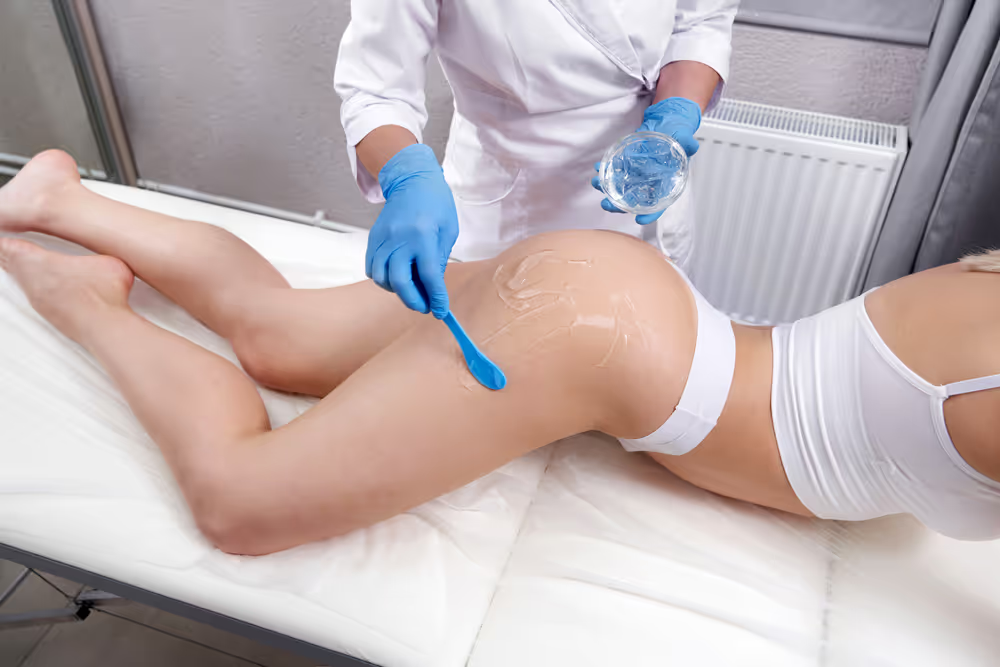
They coach you about shaving. For most areas, shaving the day before treatment is ideal. If you’re prone to razor burn, they may suggest 24 to 36 hours lead time so the surface calms. They will trim any missed spots before lasing, not zap over stubble.
My field notes from real treatments
A client with Fitzpatrick V skin tone, dense coarse hair on the lower legs, and a history of post-inflammatory hyperpigmentation came in after a bad experience elsewhere. The previous clinic used a diode laser with aggressive fluence and minimal cooling. She had strip-like hyperpigmentation that lingered for months. We rebooted with an Nd:YAG at conservative settings, long pulse width, and strong cooling, spacing sessions at eight weeks. She reached about 80 percent reduction after eight sessions with zero new pigment changes. Progress felt slow, but safe. She still sends photos from beach vacations, proud of bare legs she never thought she’d enjoy.
Another case: a fair-skinned runner with stubborn ingrowns on the bikini line. Waxing made it worse. With a 755 nm alexandrite, we started gently and focused on areas prone to curl. Ingrowns dropped by half after two sessions, and her jogs stopped being a chafe-fest. That’s a benefit people underestimate: laser doesn’t just reduce hair, it often reduces the cycle of inflammation that comes with shaving and waxing.
Where Laser hair removal Hamilton shines
Hamilton’s advantage is choice. You’ll find clinics that specialize in diverse skin tones, and others that pair laser with dermatology support. Proximity matters because laser is a series, not a one-off. Being able to stick to a schedule without long commutes boosts your results. Many Hamilton clinics offer evening or weekend appointments, which helps you keep momentum without rearranging your life.
If you’re comparing options, ask if they treat a broad cross-section of Hamilton’s community. A clinic that routinely works with a wide range of complexions will have parameter playbooks and real instincts that keep you safe.
A realistic roadmap
Plan your series across seasons. If you start in autumn, aim to complete your core sessions by late spring, especially for sun-exposed areas like forearms and lower legs. If you start in summer, focus on less exposed areas, stay strict with sun protection, and be prepared to pause if you tan.
Budget for the full journey, not a single promotion. The most satisfied clients I’ve seen chose clinics that spelled out total cost ranges, offered honest projections, and didn’t try to clear three areas in one marathon session. Your skin tolerates better when you space larger areas and let the epidermis recover.
Document your progress. Photos taken under similar lighting tell the truth and help your provider adjust. Share details about your cycle, stress, or medication changes, especially if you see a plateau or unexpected regrowth.
The bottom line on choosing well
You’re not buying laser beams. You’re buying judgment. The right Hamilton clinic uses appropriate devices, respects your skin’s relationship with light, and tracks your progress with scientific discipline. The consultation should leave you feeling informed and in control. The first session should include a patch test and a calm pace. The aftercare should be clear, concise, and explained like a partner, not a vendor.
Laser hair removal will not make you hairless overnight, but in the hands of the right team, it will steadily reduce hair density, tame ingrowns, and lighten the https://laserhairremovalservicehamilton-osco597.image-perth.org/hamilton-laser-hair-removal-myths-vs-facts mental load of constant shaving or waxing. Pick the clinic that proves it understands that promise and the responsibility that comes with it. With the right match, Laser hair removal Hamilton wide can be both safe and deeply satisfying, the kind of decision you appreciate every time you step out in shorts or glide a hand over smooth skin and realize you have one less thing to think about.